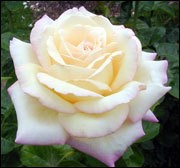
A Rose (Rosarium Uetersen) and a Tip for a Happy, Healthy and Successful Living


IMG_0727

Class:   Climber

Date of Introduction:   1977

Parentage:   ‘Karlsruhe’ (hybrid kordesii, Kordes, 1957) x seedling

Hybridizer:   Reimer Kordes


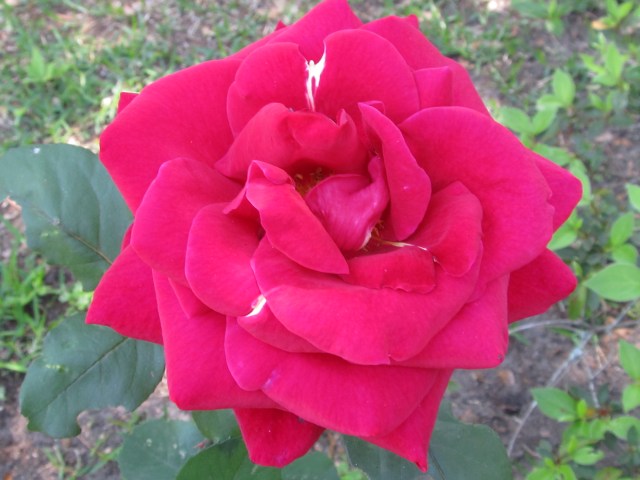
‘Rosarium Uetersen’ was named for the German rose garden that employed Reimer Kordes as a hybridizer. It is a climber with a petal count of 100+, growing 6-12 ft. high and 6+ ft. wide. The medium to large blooms opens wide and almost flat and has a light scent and leathery green foliage. The color varies from deep pink to coral with a tint of silvery pink as they age. The bloom can be singly or in clusters which can get heavy and will tend to droop. It is disease resistant and will rebloom intermittently throughout the season.


I have seen ‘Rosarium Uetersen’ in a public garden and also in a rose show where it always gets to the top award table. I saw this rose at its main flush and the deep rose pink color made a great statement. At the garden, it was growing draped over a pergola and the pergola was covered with huge clusters of deep pink blooms. I tried to look for it in some catalogs but for a while I could not find it. A couple of years ago, I saw it in one of the catalogs and I ordered it. They must have changed the name because when the order arrived with the other roses, I could not find it in the box. As I was unpacking and checking my order, there was one rose left and it was Seminole Wind. I didn’t remember ordering it. Then the invoice cleared it up. ‘Seminole Wind’ is ‘Rosarium Uetersen’. I have never heard of ‘Seminole Wind’ before. It is always exhibited as ‘Rosarium Uetersen’. I planted it next to a post and there it is, pictured above and on the banner.


Tip # 33 – Don’t delay acting on a good idea. Chances are someone out there has just thought of the same thing. Success come to the one who acts first.


Until Next time. Stop and Smell the Roses.

Rosalinda R Morgan

Author & Garden Writer


A Rose (Mutabilis) and a Tip for a Happy, Healthy and Successful Living

Mutabilis

Rose:   Mutabilis

Class:   China

Date of Introduction:   Before 1894


Mutabilis was probably introduced to Italy from China, and then introduced to commerce in 1934 by way of a Swiss botanist Henri Correvon of Geneva who got his cuttings from the garden of Italian Prince Ghilberto Borromeo at Isola Bella. Otherwise known as the “Butterfly Rose” because when the plant is in full bloom with the multi-flowered flowers, Mutabilis appears to be covered with butterflies fluttering on the plant and this China rose is so easy to spot.


Mutabilis sports different colored blooms unlike those of any other rose, ranging from soft yellow as it opens with an orange blush on the underside, slowly turning into shades of peach, then pink, then eventually darkest pinkish red. Each color usually lasts for a day. All different colors can appear on the same bush at the same time. Its blooms have a slight fragrance which disappears as it ages.


Mutabilis is a single, five-petal rose. Rose is considered single when it has less than eight petals. The first blooms appear in clusters and continue through to hard frost. It does not mind cold, but it is sensitive to frost. It is slow to start but worth the wait. The plant is versatile, vigorous, sending long canes with glossy, narrow, tapering leaves with purplish tint and can tolerate partial shade and can thrive in poor soil.


I saw a Mutabilis covering a front porch in Charleston, SC the first time I visited the city. The homeowner saw me about to take a picture and without saying a word, he graciously moved his truck out of the way so I could take a picture. That is the picture above that I took. After I took my shot, he moved his truck back. I was impressed! Nice people, those Charlestonians!!!


Mutabilis makes an excellent hedge, can be grown as a landscape accent or in mass planting. In mild climates and protected locations, it can grow up to 6 to 10 ft. tall and wide as a shrub and can be utilized as a climber and can grow up to 15 ft. in height.


Mutabilis is very popular because it is very disease resistant. It is no wonder Mutabilis has been selected as one of the EarthKind Roses. It has also won the Royal Horticultural Society Award of Garden Merit in 1993.


Tip #32 – Early on, put your head down, learn as much as you can, and look up in 10 years.


Until Next time. Stop and Smell the Roses.

Rosalinda

A Rose (Grande Dame) and a Tip for a Happy, Healthy and Successful Living

Grande Dame Hybrid Tea Rose
Grande Dame – Photo Courtesy of Edmunds Roses

Rose:   Grande Dame

Class:   Hybrid Tea

Date of introduction:   2011

Hybridizer:   Tom Carruth

Parentage:   ‘Meredith’ x ‘Wild Blue Yonder’


If you are looking for a fragrant rose besides the old standby, Grande Dame is your answer. Grande Dame is considered a Hybrid Tea rose with the old fashioned form and an old Garden rose fragrance. The bloom is quite large, 5 to 6 inches across with over 30-petal count and its color of deep rose-pink has a hint of blue tones provided by its ‘Wild Blue Yonder’ parentage. The scent of its bloom invites you to bury your nose in it and inhale its old garden rose fragrance which is quite strong reminding you of Grandma’s Garden.

Grande Dame grows into a big shrub about 4 to 5 ½ feet in height with few thorns. The foliage is deep green and very disease resistant. Grande Dame blooms in flushes all through the season, giving plenty of blooms to enjoy its fragrance inside your home and in the garden as well as a great addition to your landscape.

Grande Dame is one rose to have in your garden – it’s vigorous, disease resistant, great color, plenty of beautiful blooms and very fragrant. So what are you waiting for?


Tip #30 – Spend your time wisely. For when it’s lost, it cannot be retrieved.


Until Next time. Stop and Smell the Roses.

Rosalinda R Morgan

Author & Garden Writer


A Rose (Alnwick Castle) and a Tip for a Happy, Healthy and Successful Living

IMG_1774


Rose:   Alnwick Castle

Class:   Shrub

Date of Introduction:   2002

Hybridizer:   David Austin


I had ‘Alnwick Castle’ in my garden in New York and I bought one for my garden in Charleston.

‘Alnwick Castle’ has beautiful pink flowers, about 120 petals, cup-shaped buds that gradually open to deeply cupped flowers with pointed edge petals. The color is soft pink with pale pink edges. It is bushy, relatively upright, 4 ft. tall by 2 ½ ft. wide and stays compact. It continues to bloom all season long. Foliage is polished green and perfectly complements the flowers. It is hardy, fairly disease resistant and has a good Old Rose fragrance with just a hint of raspberry.

‘Alnwick Castle’ rose is named for The Alnwick Garden in the UK which has a wonderful collection of roses.


Tip #29 – Give others credit for what they do. Show your appreciation of what they have done by saying “thank you”.


Until Next time. Stop and Smell the Roses.

Rosalinda R Morgan

Author & Garden Writer


A Rose (Rose de Rescht) and a Tip for a Happy, Healthy and Successful Living

Rose de Rescht

Rose:   Rose de Rescht

Class:   Portland

Date of Introduction:   About 1880


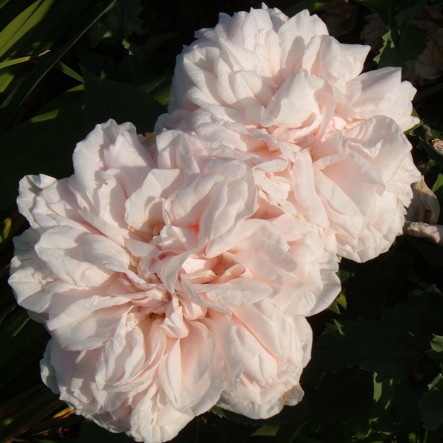
This compact Portland rose is a very reliable rebloomer. It gives a big flush of tightly-formed rosette blooms in spring, pompon like and if you keep on deadheading it just keeps on blooming. Fragrance is very strong. Buds open in fuchsia-red color and fade into light lilac. ‘Rose de Rescht’ will tolerate some shade.


The only disease I find is rust but all I do is prune the stems that are affected and new healthy shoots appear. Parentage is obscure, possibly Persian and discovery date is speculated at about 1880 but its recurring blooming qualities coupled with those old fashioned traits and its strong fragrance entitle this rose a place in any garden, large or small. ‘Rose de Rescht’ is eligible for Victorian Rose Award at a rose show.


I planted lavender ‘Hidcote’ next to it. They complement each other in color and fragrance. Since ‘Rose de Rescht’ is a compact little rose, it is also a good specimen for container planting. For history buffs, ‘Rose de Rescht’ was believed to be growing at Castle Howard, in Yorkshire, England before the Second World War.


Tip #28 – Do not forgo sunscreen. Wrinkles and skin cancer can be avoided if you protect yourself.


Until Next time. Stop and Smell the Roses.

Rosalinda R Morgan

Author & Garden Writer

A Rose (Peace) and a Tip for a Happy, Healthy and Successful Living

Peace Rose

Rose:   Peace

Class:   Hybrid Tea

Date of Introduction: 1945

Parentage:   (‘George Dickson’ x ‘Souvenir de Claudius Pernet’) x (‘Joanna Hill’ x ‘Chas. P. Kilham’) x ‘Margaret McGredy”

Hybridizer:  Francis Meilland in the late 1930s


The rose that is called ‘Peace’ in the United States and Great Britain is called ‘Mme Antoine Meilland’ in France, ‘Gioia’ (Joy) in Italy and ‘Gloria Dei” (The Glory of God) in Germany. ‘Peace is one of the most famous roses of the century if not of all times. It is one of the few modern roses surrounded by legend and myth. It was bred by Francis Meilland under the code name 335-40 and named it Madame A. Meilland, after his mother. Francis Meilland hybridized another lemon yellow rose with ‘Peace’ as the parent and named her ‘Grand’mere Jenny’, after his paternal grandmother.


One story goes that it was hybridized in France in the last years before World War II, and escaped as unnamed cuttings in the last American diplomatic bag to leave Paris as World War II began. Recognized as a winner, the rose was propagated by Conard-Pyle Co., a leading American rose nursery and released in 1945. Because it returned in peacetime to a liberated France, ‘Peace’ was the name the rose was given. Later, the ‘Peace’ rose took the world by storm after being the centerpiece on all the tables at the organizational meeting of the United Nations at San Francisco in 1945.


Another version of the story of ‘Peace’ is that it began in France when the Nazi invasion forced young Francis Meilland to smuggle three one-pound packages of an experimental rose into other countries. Two of the packages were confiscated, but the third made it to Robert Pyle of Conard-Pyle Co. in the United States. Ten years later, after this rose of outstanding character and quality had been tested throughout the United States, the ARS planned a special name-giving ceremony. At the Pacific Rose Society Exhibition in Pasadena, CA, Robert Pyle declared “We are persuaded that this greatest new rose of our time should be named for the world’s greatest desire – Peace.” Francis Meilland’s rose was given its American and English name ‘Peace’ on April 29, 1945, the day Berlin fell to the allies. Nine years after introduction, an American authority estimated that some thirty million ‘Peace’ were growing in gardens around the world. Nowadays, nobody seems to have kept count. With all the royalties coming from the sale of ‘Peace’, the Meillands were able to build a rose hybridizing empire on the Cap d’Antibes on the Mediterranean shores.


Another melodramatic story, so often told, is that the budwood of ‘Peace’ was smuggled out of the south of France by a heroic U.S. embassy official in November 1942, just hours before the German invasion. It’s a very good story, but the truth of the matter according to Francis Meilland, is that the budwood was sent to Germany, Italy and the United States via ordinary postal channels in the summer of 1939. Southern France at that time was not yet invaded. It was perfect timing. By receiving a few cuttings in 1939, Conard-Pyle was able to introduce this rose at the San Francisco conference to found the United Nations, the day Berlin fell in 1945. If these cuttings were received in November 1942 they could not have started budding until 1943, and they could not have built up enough stock of this rose in time for nationwide distribution three years later.


The day the war with Japan ended, ‘Peace’ was given the All American Rose Selection Award. A month later, the day the peace treaty was signed with Japan, ‘Peace’ received the American Rose Society’s supreme Award, the Gold Medal. ‘Peace’ has won most of the world’s top rose awards: Gold Medal, Portland 1944; All American Rose Selection 1946; Gold Medal Certificate, American Rose Society 1947; Golden Rose, The Hague 1965; Hall of Fame, World Federation of Rose Societies 1976; and Award of Garden Merit, Royal Horticultural Society 1993. Today, ‘Peace’ is still the world’s favorite rose.


‘Peace’ is a vigorous, bushy, upright plant, 4-5 ft. tall with stiff canes covered with large, leathery, beautiful, dark green, glossy foliage with good disease-resistant quality. New growth appears light red. ‘Peace’ resents heavy pruning. Buds are high-centered and cupped at opening. Blooms are double (40 to 45 petals), 5 to 6 inches across, near perfect in form and more or less continuous flowering throughout the season. Colors vary from day to day but are essentially creamy yellow edged in rose pink. It has a slight fragrance. It is a good exhibition rose and an excellent cut flower. It’s rated 8.0 on the 2017 Handbook for Selecting Roses.


Flowers were huge in 1940s. Somehow ‘Peace’ planted in the 1940s and still thriving today at well-maintained public gardens, war memorials, or at the homes of veteran gardeners are larger compared to the blooms on the ‘Peace’ plant you will receive from any nursery today. Even if genetic science tells you otherwise, still the ‘Peace’ sold today is just a pale imitation of the old ‘Peace’. Vita Sackville-West hated it and thought it horribly coarse.


Hybrid teas bred since the 1950s often have at least a little ‘Peace’ blood in them. Of the many mutations of ‘Peace’ introduced over the years, the most popular is ‘Chicago Peace’. Other sports of ‘Peace’ are ‘Berlin’, ‘Garden Party’, ‘Gold Crown’, ‘Glowing Peace’, ‘Love and Peace’ (2002 AARS Selection), ‘Perfume Delight’, ‘Pink Rose’, ‘Princesse de Monaco’, ‘Royal Highness’, ‘Speaker Sun’, ‘Sterling Silver’, and ‘Tropicana’.


A Climbing form was introduced in 1950. ‘Climbing Peace’ is a climbing sport of ‘Peace’. It has shiny, deep green, almost leathery foliage, and it has a very pleasing color, peachy pink suffused with apricot yellow. Its buds are exquisitely pointed, and they open into large, long-lasting flowers. It is so robust and healthy that you never have to spray it with pesticides. Its one real flaw is a complete lack of fragrance.


‘Peace’ is showcased at the following Display Gardens: Sturgeon Memorial Rose Garden, Largo, FL; Atlanta Botanical Garden, Atlanta, GA; Julia Davis Rose Garden, Boise, ID; George L. Luthy Memorial Rose Garden, Peoria, IL; Richmond Rose Garden, Richmond, IN; City of Portland Rose Circle, Portland, ME; The Jim Buck Ross Rose Garden, Jackson, MS; and Norfolk Botanical Garden, Norfolk, VA.


Tip #27 – Increase your own happiness and peace of mind by paying three sincere compliments each day.


Until Next time. Stop and Smell the Roses.

Rosalinda R Morgan

Author & Garden Writer

A Rose (Mister Lincoln) and a Tip for a Happy, Healthy and Successful Living


IMG_2164Rose:   Mister Lincoln

Class:   Hybrid Tea

Date of Introduction:   1965

Parentage:   ‘Chrysler Imperial’ x ‘Charles Mallerin’

Hybridizer:   Swim & Weeks


Mister Lincoln is the quintessential red rose. Other red roses come and go but Mister Lincoln survives them all. It is still one of the top rated roses both on the exhibition table and in the garden. It has that enduring quality.

Mister Lincoln grow 5-7 ft. tall by 2 ft. wide and produces single long-stemmed blooms. Slender buds open to 6-inch double blooms (40 to 55 petals) with deep velvety red color and very strong damask fragrance. It was an AARS selection winner for 1965. If you need gorgeous red roses for your garden, plant Mister Lincoln rose. Best where days are warm and nights cool.

You can grow Mister Lincoln in pots. Years ago in my old garden, I have one planted in the ground. This year, I bought one for my garden and have it in a pot. It is susceptible to blackspot and mildew but because of its vigorous habit, I just remove the infected leaves. Some gardeners spray them with milk. I still have to try that.


Tip #26 – Dream big. Anything can happen.


Until Next time. Stop and Smell the Roses.

Rosalinda R Morgan

Author & Garden Writer
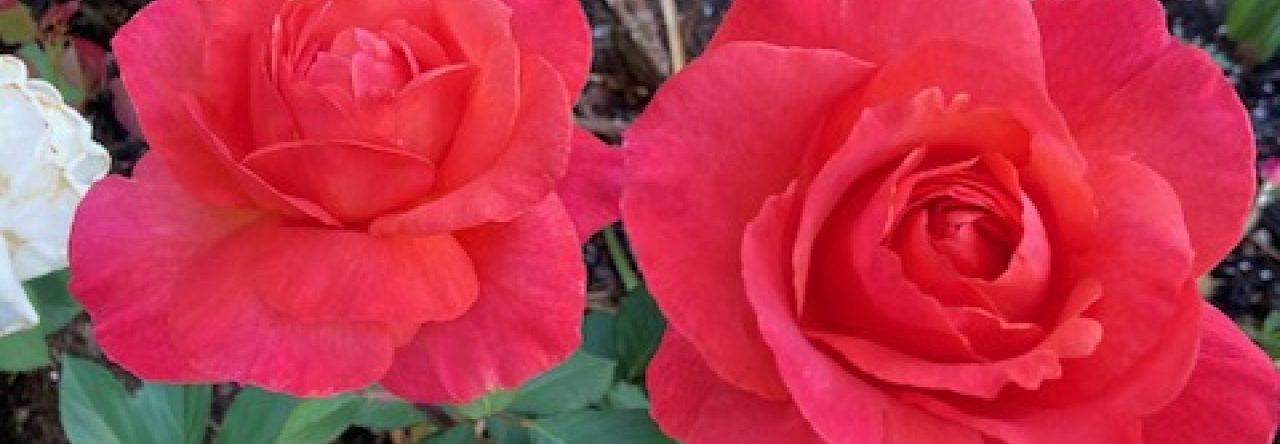
 

A Rose (Souv. de la Malmaison) and a Tip for a Happy, Healthy and Successful Living


Souvenir de la Malmaison
Photo from http://www.classicroses.co.uk.

Rose:   Souvenir de la Malmaison

Class:   Bourbon

Date of Introduction:   1843

Hybridizer: Beluze

Souvenir de la Malmaison is one of the most beautiful of Old Garden Roses. It is a beautiful light pink to white Bourbon Rose. The blooms are very full, 4 to 5 inches across and quartered with a lovely scent. The blooms start out deeply cupped with pale pink petals that turn to white as they mature. The foliage is glossy, medium to dark green on a thorny stem. The plant is low and spreading in nature (3’ high by 4’ wide) and it takes 1-2 years to become established. There is a climbing version (Bennett, 1893) which grows 8 to 12 ft tall and takes about three years to get established and then grows so vigorously. It was the climbing version that I received when I ordered Souvenir de la Malmaison and I kept on wondering why it kept on sending these long canes. I finally moved it next to an arbor and it was very happy there. It gave plenty of blooms but the blooms tended to ball (not open) on wet weather making the very full blooms into a brown unappealing mush. The rose will outbloom most hybrid teas as long as it does not get rained out.

Souvenir de la Malmaison is eligible to win the Dowager Queen (Queen of Old Garden Roses) at a rose show. Old Garden Roses are those introduced before 1867, many of which have a fascinating history. Souvenir de la Malmaison is a Bourbon Rose, so named for the island where the first Bourbons originated. Ile Bourbon is an island in the Indian Ocean off of Madagascar, now called Reunion Island. The French colonial landowners in the early 1800s set off their properties with large hedges of roses, alternating the native China roses with a Damask Perpetual. A hybrid rose appeared that caught the fancy of the landowners and avid gardeners in France. Both seeds and cuttings of this original plant were brought to France and bred. The descendants of these roses are the Bourbons.

Souvenir de la Malmaison means remembrance of Malmaison, named for the gardens of the Empress Josephine (wife of Napoleon Bonaparte) at Chateau de Malmaison. Josephine was a devoted gardener and grew more than two hundred varieties of roses, among thousands of other plants. Souvenir de la Malmaison was named for her dedication and though it was bred some years later after her death, it is grown at Chateau de Malmaison today.


Tip #25 – Don’t be scared to do things. Looking back you’ll think, “What was I so afraid of?”


Until Next time. Stop and Smell the Roses.

Rosalinda R Morgan

Author & Garden Writer
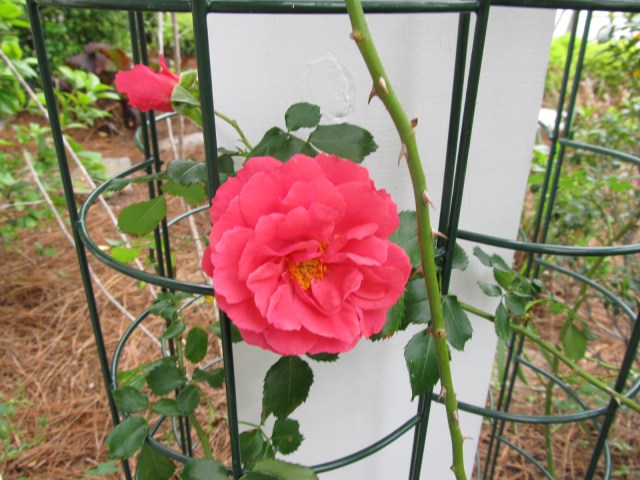


A Rose (Cherry Parfait) and a Tip for a Happy, Healthy and Successful Living

Cherry Parfait
Photo Credit – Jackson & Perkins Roses

Rose:   Cherry Parfait

Class:   Grandiflora

Date of Introduction:   2001

Parentage:   (Meidanu x Macman) x Meichoiju

Cherry Parfait is a beautiful red and white, bi-colored grandiflora hybridized by Meilland International in 2001 and introduced by Conard-Pyle. Cherry Parfait blooms with the white petals edged in red stand out in the garden and in the vase. The flower size is 3 ½ to 4 inches with a petal count of 35-40 with a slight fragrance. As her large, perfectly formed, exhibition-style blooms open up, a phenomenon called phototropism changes the white pigments in the petals to pink and red along the edges. This happens as the petals are exposed to the ultra-violet rays of the sun. This phenomenon can be quite stunning. After the blooms open up, they slowly change to all pink as they age. Soon, they are replaced by numerous other bi-colored blooms.

Cherry Parfait is a low-growing rose with a rounded growth habit. Its dark green foliage with long, straight stems is highly disease resistant. Cherry Parfait thrives in high temperatures during the long, summer months but needs winter protection to protect her from the high winter wind. This attractive bi-colored rose is very attractive throughout the season and very floriferous. With its stunning coloration accentuated by dark foliage, Cherry Parfait also is very effective in mass planting. Cherry Parfait makes a great companion plant for perennials and is also an excellent container plant.

Cherry Parfait is the 2003 Grandiflora winner of the All-American Rose Selections (AARS) award. Cherry Parfait with its showy bi-colored petals is always a treat for the eyes.

Tip #24 – Make a good first impression.

Until Next time. Stop and Smell the Roses.

Rosalinda R Morgan

Author & Garden Writer

A Rose (La Reine Victoria) and a Tip for a Happy, Healthy and Successful Living

La Reine Victoria

Photo from Peter Beales Roses

Rose:   La Reine Victoria

Class:   Bourbon

Date of Introduction:   1872


The rich lilac-pink, full, and cupped middle size blooms are produced on a vigorous, slender erect bush almost thornless plant with soft green leaves. It can reach a height of 4 ½ to 5 ½ ft. or can be trained as a climber where it can reach 15’ in each direction. When the canes are pegged over (placed horizontally), this rose responds with lots of lateral growth with long stems. This rose blooms abundantly in mid season with good repeat bloom in the fall where the plant is literally covered with very fragrant 3-3 ½ blooms. A heavy feeder, high nitrogen won’t cause any major maladies. It is winter hardy and very disease resistant.

Tip #23 – Be grateful. Every moment on this earth from the mundane to the amazing is a gift that we are all lucky to share.

Until Next time. Stop and Smell the Roses.

Rosalinda R Morgan

Author & Garden Writer


A Rose (Nicole) and a Tip for a Happy, Healthy and Successful Living

IMG_0358

Rose – Nicole

Class:   Floribunda

Date of Introduction:   1985

Parentage:   seedling x Bordure Rose


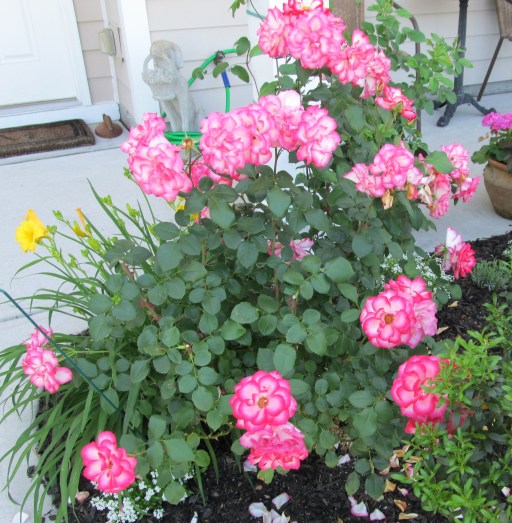
Nicole is a beautiful floribunda rose introduced in 1985 and has the most stunning coloration that everybody seems to notice. I planted two Nicole on my front yard at my old house and people who passed by the house noticed it right away. They stopped, admired it and touched and smelled the rose to find out if it was real. Nicole is vigorous, disease resistant and blooms continuously. The 25-35 petal bloom is white edged in cherry-pink with light fragrance. The four inch flower come in clusters of three to five blooms on a strong and very thorny stem and makes a lovely bouquet. It has dark, shiny leathery leaves. Nicole is a top exhibition rose and a great garden rose too.

Some rosarians recommend planting Nicole in the back of the border. I planted my two Nicole roses on opposite sides of the walkway in front of my old house instead where anybody who comes by the house can appreciate its beauty. I also planted Nicole in the front yard at my new townhouse.


Tip #22 – Be bold and courageous. When you look back on your life, you’ll regret the things you didn’t do more than the ones you did.


Until Next time. Stop and Smell the Roses.

Rosalinda R Morgan

Author & Garden Writer


A Rose (Abraham Darby) and a Tip for a Happy, Healthy and Successful Living

  Abraham Darby

Photo from David Austin Roses

RoseAbraham Darby

Class:   Shrub

Date of Introduction:   1991


Abraham Darby is one of the most vigorous of all David Austin roses. Having heard from fellow rosarians that it bears long arching canes, I decided to plant it along a fence on the west side of my property in New York and let it spread out. Abraham Darby is a well-rounded shrub which bears numerous, very large 5” across, very full (41+ petals), cluster-flowered, in small clusters, old fashioned, quartered bloom form, double cup-shaped flowers in shades of apricot becoming tinted with pink as they age. Few roses make such a fine display or produce such magnificent blooms with glossy green foliage all through the season. To encourage a better crop of flowers and help maintain its compact form, summer pruning is recommended. The growth is vigorous and reliable and it repeats well. Height is 5 ft. x 5 ft. or 8 ft. as a climber.


Abraham Darby is an outstanding rose with disease resistance, very prolific and continually blooming throughout the season. I planted a pink clematis next to it and they complemented very nicely. It has a rich, fruity fragrance with a refreshing sharpness. Abraham Darby is named after one of the founding figures of the Industrial Revolution, who lived in Shropshire.


Tip #21 – Break big jobs into manageable segments and make sure each succeeding segment builds on what you have before.


Until Next time. Stop and Smell the Roses.

Rosalinda R Morgan

Author & Garden Writer