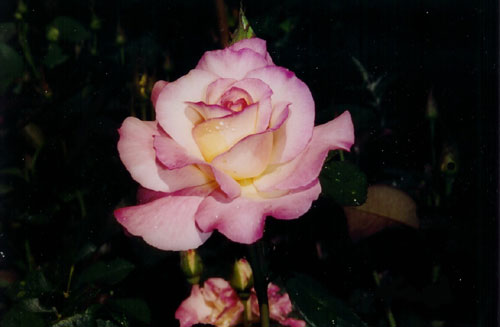
This
exhibition quality pink blend Hybrid Tea is a winner of the All-America Rose
Selections Award in 1994, Portland Best Rose in 1998 and the Gamble Fragrance
Award in 2003. It is white with raspberry pink edges and is both excellent on
the show table and garden display. It is a medium, moderately thorny, bushy
plant with an upright habit, semi-glossy dark green leaves on long stems and
produces lots of large high-centered blooms 4 to 6 inches across. It grows 3 to
5 ft tall and 2 to 3 ft across. Blooms come on single stem or in clusters of
three or four. Blooms are double (30 to 40 petals) and tend to get larger in
cool weather.
Secret is a
generous performer giving blooms from late spring to early summer and repeats
through to fall. It can be used in beds and borders and if you need lots of
fragrant blooms to share with others, plant Secret in the cutting garden in
threes so the plants look bushier. It has a strong, spicy fragrance. It is
winter hardy and has good disease resistance. Who says modern hybrid tea does
not have any fragrance? Secret can perfume a room with just one bloom.
Tip of the Day – Be around
positive people who do positive things.
After two
years going through the toughest tests in their test gardens across the
country, the All-America Rose Selections had a winner for 2012. The 2012 only
AARS winner is Sunshine Daydream hybridized by Meilland International
and introduced by Conard-Pyle Co./Star Roses.
Sunshine
Daydream is a butter-yellow grandiflora with
lighter edges and an ovoid bud form that turns into cup-shaped flower as it
opens up. It is complemented with dark green, glossy foliage on a round and
bushy plant, 5-1/2 ft tall and up to 4-1/2 ft wide. Sunshine Daydream
has a large flower size with about 25-to 35 petals and blooms continuously from
spring to late fall. Disease resistance is excellent including blackspot. It
has no fragrance.
For a great flower color and bloom production, Sunshine
Daydream surely is a winner to all rose lovers and gardeners. Sunshine
Daydream’s sunny color will brighten any garden. I planted one in front of my
house and it is the only yellow rose in that flower bed.
Tip of
the day – Never invest more in the stock market than you can afford to lose.
Eyeconic™ Shrub Rose is another new breeding breakthrough in the rose world introduced by the Conard-Pyle Co/Star Roses. After many years of attempting to cross modern roses with Hulthemias, (a species-type roses originating in ancient Persia), rose breeder Jim Sproul finally succeeded. The Hulthemias are a once-blooming species with a characteristic red blotch. The Eyeconics™ capture the blotch, but everything else about these roses is modern, from their rebloom to their pleasing small, shrub-like habit to their disease resistance. The bushy 3 to 4-1/2 foot plants are filled with dark green, very glossy foliage that sets off the 2- to 3-inch, ruffled, non-fragrant blooms.
Eyeconic™ Pink Lemonade is light pink to melon rose with a darker red ring surrounding the inside of the petal that is typical of the Hulthemia hybrids. The bud form is small, ovoid open melon-pink with a red ring maturing to shell pink with the red turning to a purplish eye. The medium size bloom is cuplike with an average of 8-10 petals, 3 ½ inches in diameter. The plant is prolific and blooms continuously for months with blooms in cluster of five blooms per stem with dark green, very glossy foliage. It is a breakthrough rose, coming from a breeder, Jim Sproul who has been working more than 20 years on Hulthemia hybrids.
Eyeconic Pink Lemonade has an excellent habit and self-cleaning. The plant is compact, bushy, approximately 3 ft. tall by 3 ft. wide. This ultra-vigorous shrub is a carefree addition to any garden. Unhappily, there is no fragrance.
Tip of the day: – Laugh a lot. Laughter is the best medicine.
For rose lovers who want the charm and fragrance of the Old Garden Roses with their large variety of flower forms but longer blooming period, there are large selections now available. First, there was David Austin’s English Roses, then other growers started producing roses with the Old Garden Rose characteristics. One of them is the Meilland Company of France (developer of the famous Meidiland family of Landscape Roses. Alain Meilland of the legendary French rose company, the Meilland Company that boasts six generations of family ownership and hybridizer of the Romantica Roses received the Great Rosarians of the World award for 2012.
After David Austin’s success with the English Roses, the House of Meilland followed suit with a series of garden roses blending the best qualities of Heirlooms with modern Floribundas and Hybrid Teas. They call this group of rose Romantica Roses. Many of these varieties were bred in the South of France by Meilland International. These new French Roses represent an important expansion of the English Rose style, with astonishing new varieties and versatility that take the concept pioneered by David Austin to an entirely new level from romantic antique to modern Hybrid Teas, from climbers to shrubs with extensive color ranges, nostalgic pastels to vivid hues, wide selection of attractive plant forms, excellent disease resistance, outstanding foliage typical of the Meilland breeding line, old-fashioned fragrance and dependable repeat flowering habit for all seasons color. These characteristics appeal to both the novice as well as the advanced gardener. Their improved disease resistance and garden performance make them a wonderful addition to the modern landscape.
Here is a list of Romantica Roses that you can incorporate in your garden:
Bolero – F – White – 2004
Dee-lish -HT – Medium Pink – 2011
Francois Rabelais – F – Medium Red – 1998
Guy de Maupassant – F – Medium Pink – 1996
Jean Giono – HT – Yellow Blend – 1998
Michelangelo – HT – Medium Yellow – 1997
Peter Mayle – HT – Deep Pink – 2003
Polka – LCl – Apricot Blend – 1996
Rouge Royal – HT – Red Blend – 2001
Traviata – HT – Dark Red – 1998
White Eden – LCl – White – 2004
Yves Piaget – HT – Medium Pink – 1985
Note: F (Floribunda), HT (Hybrid Tea), LCl (Large-Flowered Climber)
Tip of the Day – When someone is telling you about an important event that happened to them, don’t try to top them with your own story. Let them have the stage.
In the Rose Gardening World, Our Lady of Guadalupe is a lovely pink Floribunda with 25 petals. Our Lady of Guadalupe Rose blooms are complemented with reddish green leaves and very healthy. It is prolific bloomer and as good if not better than Knock Out roses in my garden.
When it was first introduced, only Jackson and Perkins carried it for a while with part of the sales going to a charity. It is such a lovely rose in the garden. I had two bushes planted in the middle of a formal garden with six roses on the same bed. On one of my Ice Cream Socials at my garden in New York, I showed the rose to the priest who was attending the Ice Cream Social. I also had two American Beauty roses, the priest’s favorite rose on the bed and two Brother Cadfael roses, another pink rose. The priest decided to bless the bed and the whole garden.
The following winter, we had a very harsh winter and lo and behold, the roses in that bed all died except Our Lady of Guadalupe. I then replaced the four roses with John Paul II, Brother Cadfael, Glamis Castle and Tess d’Urbervilles. When we had the Ice Cream Social again the next year, Fr. Burns was back and I told him the story. He could not believe it and told me he would tell his mother who loved to garden.
The feast day of Our Lady of Guadalupe is Dec. 12. Our Lady of Guadalupe is the patron saint of Mexico. Our Lady of Guadalupe dates back to the 16th century, when, according to tradition, an Aztec Indian named Juan Diego had a vision of the Virgin Mary in December 1531 who identified herself in Spanish. The appearance of Our Lady of Guadalupe generated the conversion of Mexico, Central and South America to Catholicism. Indeed, Our Lady of Guadalupe became an integral part of Mexican life and a central figure to the history of Mexico itself. The three most important religious celebrations in Central and South America are Christmas, Easter, and December 12, the feast day of Our Lady of Guadalupe. Her appearance in the center of the American continents has contributed to the Virgin of Guadalupe being given the title “Mother of the Americas”. After the Spanish Conquest, Diego was one of the first converts to Christianity, according to believers. He was canonized in 2002, making him the first indigenous American saint.
Tip of the Day – Share your time, treasure and talent to help others.
Conard Pyle, the introducer of Knock Out Roses also introduced the climbing rose collection of William Radler, the hybridizer of the Knock Out Family of roses. Just like the Knock Out Roses, the climbing roses are also disease resistant. One of these climbing roses is Winner’s Circle™.
This new climber from the breeder of ‘Knock Out’ is sure to become a favorite. Winner’s Circle™ is a bright red climber and can reach a height up to 12 ft. with 4 ft. wide spread. Its blooms average 3.75”, fire-engine red but no fragrance. They are non-fading and can take the heat. It is winter hardy to zone 5. Winner’s Circle™ is floriferous, a vigorous climber with semi-glossy, dark green foliage. Disease resistance is excellent. In the fall the foliage turns deep burgundy red and the plants is covered with bright orange hips.
Simplicity with its reflection in a puddle on the street.
Simplicity is a semi-double medium pink floribunda with 18 to 24 petals hybridized by Bill Warriner and introduced by Jackson & Perkins in 1979. Originally Jackson & Perkins sold them in lots of ten as a “living fence”.
It is an excellent landscape rose and is widely considered the first-ever hedge rose. Rosarians love them because they are very healthy and generous on blooms. However, there is very light or no fragrance at all. Its growth is 3-5 ft tall and 2-3 ft wide, vigorous, disease-resistant and winter hardy plant with medium green, semi-glossy foliage. Bloom size is 3”-4” and it blooms well in all climates.
Here are the various Simplicity roses in the market today. They are excellent plants for hedges.
Introduced in 1979 – Pink Simplicity (pictured above)
Introduced in 1991 – White Simplicity (Photo courtesy of J&P)
Introduced in 1998 – Yellow Simplicity (Photo courtesy of J&P)
Introduced in 2007 – Fragrant Lavender Simplicity (Photo courtesy of J&P)
Introduced in 2011 – Double Red Simplicity (Photo courtesy of J&P)
Tip of the Day – Maintain a healthy weight to help you prevent or control medical conditions such as hypertension, heart disease, diabetes, gall stones and breathing problems.
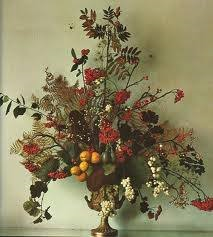
Constance Spry, introduced in 1961, is one of the first English Roses hybridized by David Austin and its success contributed to the founding of the English Roses. David Austin Roses is a flower arranger’s dream. They can be used to make wonderful floral arrangements either on their own or with other plant materials. With its voluptuous blossoms and dainty habit, you can duplicate the beauty and charm of an Old Dutch floral painting.
Photo Credit – David Austin Roses
Constance Spry can grow to a height of 6-12 ft. with a width of 6-8 ft. or 10 to 18 ft. as a climber. Bloom size is 3” with a petal count of 80+. It has a lovely pink color and very fragrant. The only drawback is it only flowers once in the spring but it blooms profusely.
Photo Credit – Flower Magazine
Who is Constance Spry?
Constance Spry is the mother of modern floral design. She would have loved to use David Austin Roses for her floral arrangements. After World War 1, she changed the formal, rigid composition of floral design with unconventional pastoral compositions; flowers arranged asymmetrically with assorted shapes of foliage in various types of containers. She used all kinds of wildflowers, grasses, pods or practically anything the Victorian ladies shunned. Her style was full of drama and a refreshing reprieve from the more staid, stiff floral design of her contemporaries.
Photo Credit – Pinterest
Connie, as she was known to her friends, was born in Derby, England, in 1886 and raised in Ireland. She found refuge from her domineering mother in the gardens of her childhood, where she began to take note of what would become her favorites: old garden roses, lilac, mock orange, laurel, buddleia, and evening primrose, as well as grasses, weeds, and other typically overlooked plants and materials.
Though flowers and gardening would be her lifelong passions, under her father’s direction she began her early professional life as an educator and social reformer. Traveling by horse-drawn wagon through the Irish countryside, she became a proponent of healthy living, educating housewives on the benefits of fresh air and nutritious food as part of a “War on Consumption” campaign. After a disappointing marriage to a coal mine manager, she took her only son back to England to begin life anew. It was there she met and fell in love with Shav Spry, a colonial civil servant who would be her lifelong companion.
It wasn’t until the age of 41, that Spry’s amateur talents as a floral designer were noticed by an influential lunch companion, leading her to Norman Wilkinson, a theater designer whose encouragement would launch her meteoric design career. With a commission to do flowers for cinemas and a perfume shop, Spry took her unorthodox visions of gathered materials and artful references out of the homes of friends and into the public eye, where she was praised for displays that in an incredibly modern twist included leaves, berries, seed pods, wild clematis, and golden hops mixed with exotic orchids. Her fate was sealed.
Suddenly this middle-aged woman found herself thrust into the social scene, befriending legendary decorator and fellow entrepreneur Syrie Maugham and an exuberant crowd of theatrical personalities and social luminaries. She became the florist of choice to London high society organizing the flowers for royal weddings. She designed the flowers for the Queen’s wedding and Coronation. Her books on flower arranging made her a household name.
Photo Credit – Antiques-Atlas.com
Besides being an influential floral artist, Constance Spry is the founder of the Cordon Bleu cooking school and an author of a bestselling cookbook bearing her name.
Tip of the Day – Turn your passions and interests into a career.
Not until late nineteenth century when a French breeder named Pernet-Ducher introduced ‘Rosa foetida persiana’ as a pollen parent to breed the first yellow and orange colored large-flowered rose called ‘Soleil d’Or’ did gardeners take notice of this rose coloration. That was a significant event.
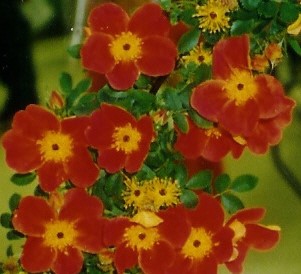
‘Austrian Copper’ is a sport of ‘Rosa foetida’ that has been cultivated as early as the 12th century in the Arab world. It is native to Iran and Afghanistan and it is not Austrian in spite of its name. It has single blossoms, 2” in diameter of bright coppery red with yellow reverse and bright yellow stamens. Its color is eye catching. The rose is so beautiful when the sun is shining behind it. It gives such luminescence that’s so magnificent. The petals are very fragile and heavy wind will knock the petals off easily. It is not fussy about soil and can be grown in poor soil as long as there is good drainage. It is winter hardy and requires little care. It is a vigorous grower and it suckers. It can take over a large area if not controlled. It has long, arching canes that can reach up to 8 ft. and can be trained to climb trellis, pergola, fence or even trees. It only takes a couple of years for the plant to reach 6 to 7 ft. high and can grow as high as 20 ft. When trained horizontally, they develop lateral shoots which will be covered with flowers the following season. Flowers arise from old wood so pruning should be done after it finishes flowering. It is a once bloomer, in late spring or early summer for 2 to 3 weeks.
Most often, ‘Austrian Copper’ will sport back to ‘Rosa foetida’. It is a stunning plant and every garden should have it. The only downside is it is susceptible to black spot so separate it from the rest of your roses. For rose exhibitor, this rose is eligible for Genesis Award.
Tip of the Day: Eat your veggies. They are good for you.
I first saw ‘Iceberg’, a white modern, cluster-flowered rose (floribunda) in California about fifteen years ago. I was amazed then at how popular ‘Iceberg’ roses was in Southern California at that time in spite of the rose being 40+ years already since it was first introduced by Reimer Kordes. They were everywhere. We saw a lot of them at private gardens and even at the wineries in Temecula.
The flowers are semi-double, 20-25 petals and well formed, pure white with occasional pinkish tints in the bud state, especially in early spring and autumn when the nights are cold and damp. The blooms are produced continuously in clusters of up to 15 per spray, long lasting, both on the bush or as a cut flower. They have a moderate but not overpowering rose fragrance. ‘Iceberg’ can be used as a bedding plant for massed display which was very effective as we saw them in California. ‘Iceberg’ is almost entirely resistant to mildew and suffers only mildly from blackspot. All in all, ‘Iceberg’ is still the best and most popular white floribunda today.
‘Climbing Iceberg’ (syn. ‘Climbing Fee des Neiges’), introduced in 1968, is never without bloom, is a disease-resistant, healthy, robust plant. It is not too rampant and can be used to cover small fences or garden structures and even entwine around veranda posts.
Awards:
National Rose Society Gold Medal 1958
Baden-Baden Gold Medal 1958
World’s Favorite Rose 1983
Royal Horticultural Society Award of Garden Merit 1993.
Tip #42 – Make physical fitness a priority. Stop being a couch potato.
Easy Going is a sport of Livin’ Easy and has the same characteristics as its parent except for the color which is golden peachy yellow with a hint of pink instead of orange and yellow. This floribunda has a rating of 8.0 at 2018 American Rose Society Handbook for Selecting Roses. Bloom size is 3 to 4 inches across. Easy Going blooms profusely and the blooms come in clusters of 3 to 7 blooms and have 26-30 thick, wavy petals complemented by healthy dark green, shiny foliage. Easy going has a sweet, honey scent. Usually its habit is short, about two feet tall and rounded. However, it can reach almost four feet tall.
Easy Going was one of the healthiest roses in my old garden. Easy Going was amazing that it got so healthy in its location where previous roses planted in the same spot always died. It has won an All-American Rose Selections Award in 1996 and Royal National Rose Society Gold Medal in 1990. If possible, plant Easy Going in group of 3 or 5 for great impact. Blue flower plants are good companion plants.
Tip #40 – Drink eight glasses of water every day to flush out the toxins in your body.




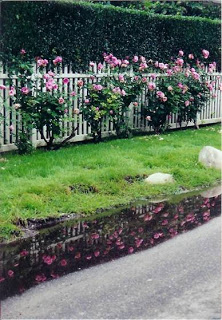


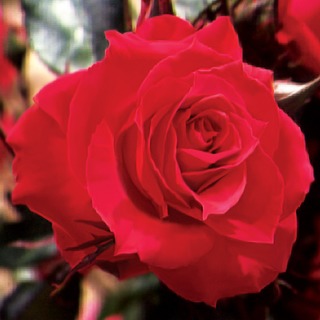

 Photo Credit – David Austin Roses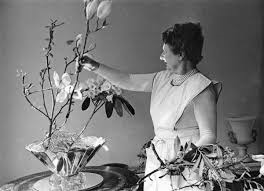



 Stop and Smell the Roses - Stay Healthy and Stress Free