A Rose (Europeana) and a Tip for a Happy, Healthy and Successful Life


Europeana 

Rose:   Europeana

Class:   Floribunda, 1963

Fragrant:   Yes

Hybridizer:   De Ruiter, 1963

Parentage:   Ruth Leuwerik x Rosemary Rose


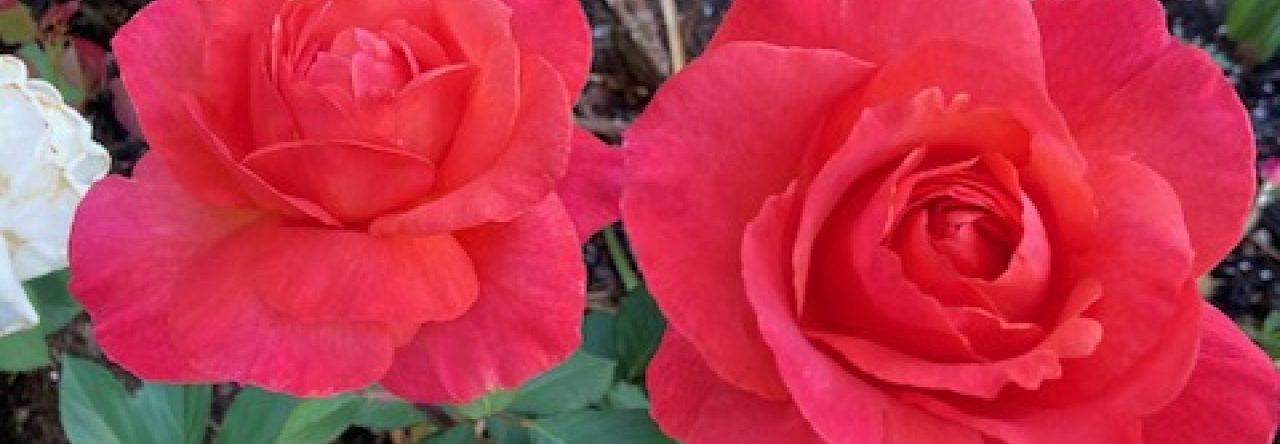
Europeana, an eye catching floribunda has pointed maroon bus that open into a 3-4 inches double (25-30 petals) or semi-double (9-16 petals) dark red blooms with bright yellow stamens Europeana is a heavy bloomer, blooming freely from spring to late fall. It blooms in clusters and make for a lovely bouquet with mild fragrance. Foliage is dark green but new growth is reddish and stay that way until the rose blooms, growing to a height of 2 to 3 ft. I had two Europeana when living in Zone 7 and they were slow to start but a fabulous rose nontheless.  It is heat tolerant but susceptible to mildew.


Tip #5 – Have a prosperity mindset. Focus on the opportunities that come your way


Until Next time. Stop and Smell the Roses

Rosalinda R Morgan

Author & Garden Writer


A Rose (Baron Girod de l’Ain) and a Tip for a Happy, Healthy and Successful Life


Baron Girod de l'Ain

 Rose:   Baron Girod de l’Ain

Class:   Hybrid Perpetual

Fragrant:   Yes  

Discovered by:   Reverchon, 1897


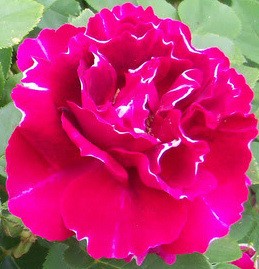
Baron Girod de l’Ain is an unusual rose and is a sport of “Eugene Furst”. The blooms are large, bright crimson, sweetly scented, double flowers, and complemented with leathery dark green leaves and reasonably healthy. Baron Girod de l’Ain has a very decorative flower with petal irregularly scalloped and rimmed with white on its cupped flower. It is quite beautiful. It opens cupped, with a ragged looking petal edges and as it matures, the outer petal curves outside while the inner petal stays cupped. This vigorous bush has an upright habit with plenty of stout thorns and the flowers repeat throughout the season. It deserves a place in your garden for its novelty. Plant it in the perennial bed next to silver foliage plants and purple flowers to accentuate its exotic and unique qualities. 


 Tip #4 – Don’t waste time grieving on past mistakes. Learn from them and move on.


Until Next time. Stop and Smell the Roses

Rosalinda R Morgan

Author & Garden Writer

A Rose (Julia Child) and a Tip for a Happy, Healthy and Successful Life

IMG_1705

Rose:   Julia Child

Class:   Floribunda, 2005

Fragrance:  Yes

Disease Resistance:   Excellent

Hybridizer:  Tom Carruth – 2006

Introducer:   Weeks Roses

Parentage: [(Voodoo x R. soulieana derivative) x Summerwine] x Top Notch

Julia Child has a rounded bushy habit, about 3 feet tall.  The bud form is pointed and opens into a full 3 ½ blooms with a petal count of 35 plus on medium-sized stem.  Foliage is bright super glossy leaves and has excellent disease resistance.   Julia Child was hybridized by Tom Carruth and is introduced by Weeks Roses of Upland, Calif.  With all the good qualities of Julia Child rose, I’m sure it will be as popular as her namesake.

Personally selected by the award-winning master chef herself, the late Julia Child, this rose combines old-fashioned style like a David Austin rose with delicious fragrance rarely found in a free-flowering plant.  Julia Child liked the butter gold floribunda with its strong sweet licorice and spice fragrance.  Julia Child rose is a 2006 AARS Winner. It adapts well to a wide variety of growing conditions.

Julia Child is a popular TV chef and author. She was born on August 15, 1912, in Pasadena, California and moved to France in 1948 where she developed a penchant for French cuisine. With a goal of adapting sophisticated French cuisine for mainstream Americans, she collaborated on a two-volume cookbook called Mastering the Art of French Cooking, which was considered groundbreaking, and has since become a standard guide for the culinary community. I bought a copy of the Mastering the Art of French Cooking when I was a young bride in the early 70s which I found myself referring to most often when I was entertaining then.  I still have my dog-eared copy of the book.  Julia Child was a television icon with her popular cooking show, The French Chef.


Tip #3 – A good sense of humor cures most all of life’s ills.


Until Next time. Stop and Smell the Roses

Rosalinda R Morgan

Author & Garden Writer


A Rose (Mme Hardy) and a Tip for a Happy, Healthy and Successful Life

madame-hardy-photo

Rose:   Mme Hardy

Class:   Damask, 1832

Fragrant: Yes


Hybridizer: Hardy

Parentage:   Unknown


Madame Hardy Rose was named after the wife of Eugene Hardy, the director of the Jardins du Luxembourg in Paris in the early 1800’s. Madame Hardy Rose is classified as a damask rose. It is perhaps the most popular white rose, and the prettiest. Madame Hardy Rose is a vigorous plant and can grow up to 6 ft tall and 6 ft wide. The blooms are 3 – 3 1/2 inches, very double with a petal count of about 200. Flowers are pure white, quartered with a green pip in the center, complemented by gray-green foliage. Canes are moderately thorny. Madame Hardy Rose blooms profusely and the plants bend to the ground due to the heavy weight of the blooms. Madame Hardy Rose has a very strong fragrance. It is prone to blackspot but hates to be sprayed. By the end of the season, the leaves are totally black but it seems not to suffer from it. Before winter sets in, take out all the blackspoted leaves. By spring, the plant seems to recover and leafs out luxuriantly. It only blooms once but blooms its heart out.


I planted Madame Hardy at the edge of my white flower bed. In spring it makes good company to Tulip Maureen, Tulip White Triumphator, Peony Festiva Maxima, then Casa Blanca lilies in summer and Montauk Daisies in the fall. If you are an exhibitor, Madame Hardy Rose is eligible for the Dowager Queen award.


Tip #2 – Stop worrying too much. Most things you worry about do not happen anyway.


Until Next time. Stop and Smell the Roses

Rosalinda R Morgan

Author & Garden Writer